August Vegetable Gardening in Virginia (Zones 6A & 6B)
This is where fall gardens are made
By August, most people feel like the garden is winding down.
Tomatoes are still producing, squash is hanging on, and you’re probably dealing with more weeds and heat than you’d like. But behind the scenes, this is one of the most important planting months of the entire year.
Because August isn’t about summer anymore. It’s about fall.
What You Can Plant in August
The focus now shifts heavily toward cool-season crops that will mature as temperatures start to drop.
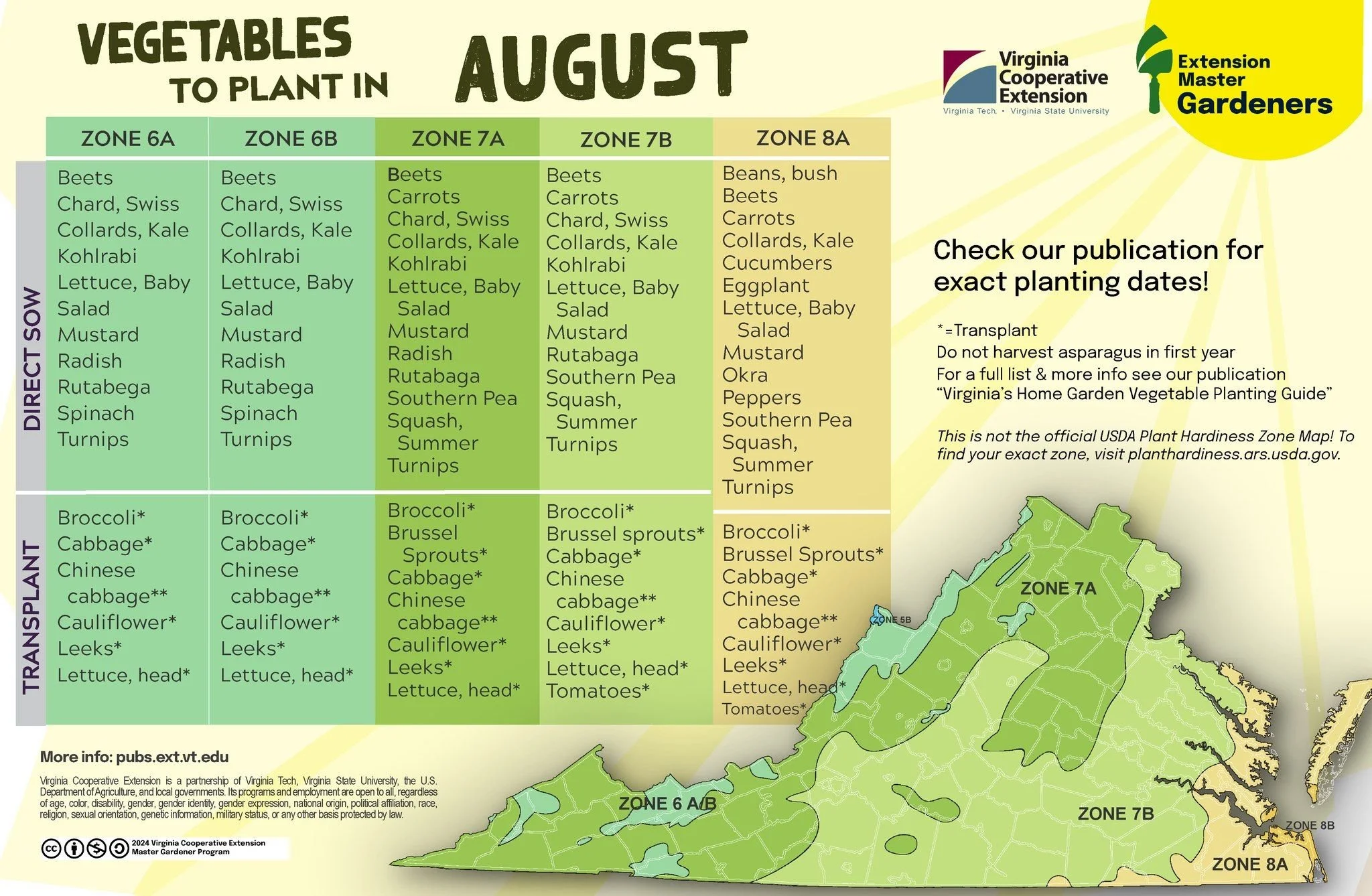
Direct Sow (Seeds in the Ground)
This is a great time to plant:
Beets
Carrots
Swiss chard
Collards and kale
Kohlrabi
Leaf lettuce and salad mixes
Mustard greens
Radishes
Rutabaga
Spinach
Turnips
These crops actually improve in flavor as the weather cools, especially after a light frost.
Why August Planting Works
It feels backward to plant cool-weather crops in the hottest part of the year, but it works because of timing.
You’re giving these crops:
Enough time to establish in warm soil
Enough growing days before cold weather arrives
By the time they mature, conditions are much better for them.
Transplants for Fall Harvest
If you’re using transplants, August is prime time for getting fall crops established:
Broccoli
Cabbage
Cauliflower
Brussels sprouts
Chinese cabbage
Leeks
Lettuce (head varieties)
These crops need time to develop before cooler temperatures slow their growth.
What’s Still Hanging On
You may still have some summer crops producing, but planting new warm-season crops is mostly behind you in Zone 6.
At this point, your focus should be:
Maintaining what you already have
Replacing it with fall crops as space opens up
The Challenges of August Planting
August planting can be one of the most frustrating times if you don’t adjust your approach.
Heat Makes Germination Tough
Seeds like lettuce and spinach don’t love hot soil.
To improve success:
Water consistently
Plant a little deeper
Use light mulch to keep soil cool
Moisture Is Everything
Hot, dry conditions can stop seeds from ever getting started.
Keeping the top layer of soil consistently moist is critical until seedlings are established.
Timing Is Tight
You’re working within a shrinking window. Waiting too long means crops won’t have enough time to mature before colder weather sets in.
A Few Smart Moves for August
Replant As You Harvest
As summer crops fade or get pulled out, immediately use that space for fall planting.
Use Shade to Your Advantage
Planting near taller crops or using temporary shade can help seedlings survive the heat.
Keep Expectations Realistic Early
Some crops may start slow in the heat but will take off once temperatures begin to moderate.
The Way to Think About August
August is where the garden resets.
Instead of pushing summer crops harder, you’re transitioning into the next season. The work you put in now determines how long your garden keeps producing into the fall.
The gardeners who plant in August are the ones still harvesting when everyone else is finished.
Want to Go Deeper?
Virginia Cooperative Extension provides detailed fall planting timelines and crop-specific recommendations that are especially useful this time of year:
https://ext.vt.edu/lawn-garden/home-vegetables.html
Source: Virginia Cooperative Extension, “Virginia’s Home Garden Vegetable Planting Guide”
August doesn’t feel like a fresh start, but it is. Plant now, and you’ll keep your garden going long after summer fades.
We are Your Locally-Owned Garden Store.