Late July Vegetable Gardening in Virginia (Zones 6A & 6B)
Where smart gardeners start thinking fall, not summer
Late July is where the mindset shifts again.
Your garden is probably producing right now, tomatoes coming in, squash everywhere, maybe more cucumbers than you know what to do with. But while most people are focused on harvesting, this is actually one of the most important planting windows of the year.
Because what you plant now is what carries you into fall.
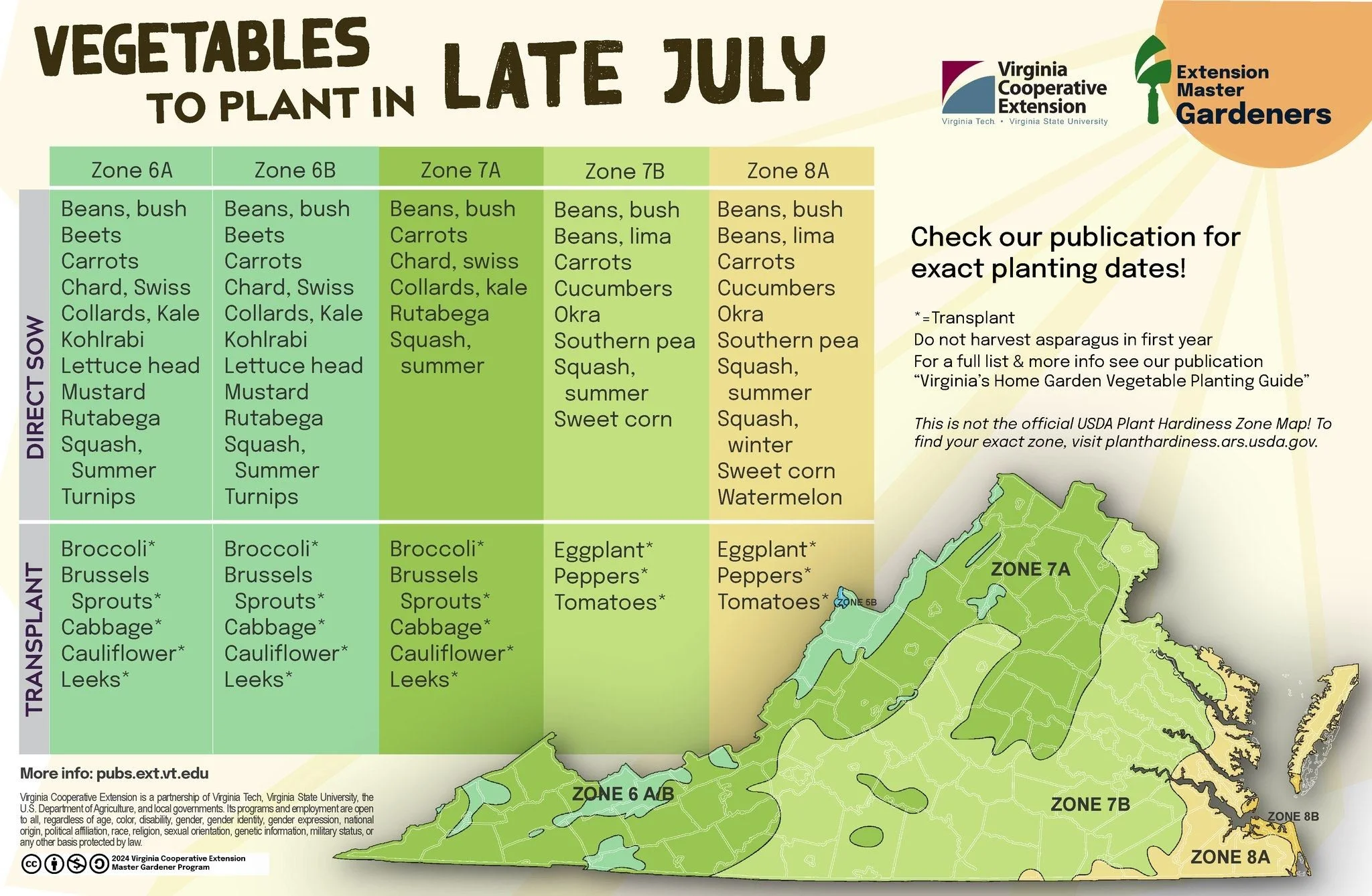
What You Can Plant in Late July
The list starts to shift back toward crops that can handle cooling temperatures later on, even if you’re planting them in the middle of summer heat.
Direct Sow (Seeds in the Ground)
You’ve got a strong mix of quick growers and cool-season crops to work with:
Beans (bush)
Beets
Carrots
Swiss chard
Collards and kale
Kohlrabi
Mustard greens
Rutabaga
Turnips
Summer squash
You can also begin working lettuce back in, especially toward the end of the month if you can keep it from overheating during germination.
Where the Opportunity Is
Late July is really about getting ahead of fall.
Crops like:
Carrots
Turnips
Rutabaga
Kale and collards
will mature as temperatures cool down, which is when they actually taste better and perform best.
If you wait until it feels like fall, it’s too late to plant them.
Transplants for Fall Production
If you’re using transplants, this is the time to start introducing your fall brassicas:
Broccoli
Cabbage
Cauliflower
Brussels sprouts
Leeks
These crops need time to establish while it’s still warm so they can produce when temperatures drop.
What’s Still Hanging On
You can still plant a few warm-season crops, especially early in this late July window:
Beans
Summer squash
But at this point, the focus should start shifting away from summer production and toward what’s next.
The Challenges of Planting in Late July
This is one of the harder times to plant, not because of frost, but because of heat.
Germination Can Be Tough
Hot, dry soil makes it harder for seeds to sprout.
The fix is simple, but important:
Keep soil consistently moist
Water lightly and often until seeds come up
Heat Stress Is Real
Young seedlings can struggle in full sun during peak summer heat.
If possible:
Plant in the evening
Use light shade from taller plants
Consider temporary shade cloth
Timing Is Tight
You’re working against the clock now. Late July planting works because it gives crops enough time to mature before colder weather shows up.
Waiting even a couple weeks can make a difference.
A Few Smart Moves Right Now
Use Open Space Immediately
As summer crops start to fade or get pulled out, don’t leave bare ground. Replant it right away.
Keep Water Consistent
This is probably the biggest factor in whether late July planting succeeds or fails.
Lower Your Expectations on Speed, Not Results
Plants may not jump out of the ground as fast as they did in spring, but they’ll catch up as temperatures level out.
The Way to Think About Late July
Late July is where experienced gardeners separate themselves.
Instead of winding down, they’re resetting the garden for a second season.
If you take advantage of this window, you’re not just gardening for summer, you’re setting yourself up to keep harvesting well into the fall.
Want to Go Deeper?
Virginia Cooperative Extension has detailed planting timelines and fall gardening recommendations that are worth referencing this time of year:
https://ext.vt.edu/lawn-garden/home-vegetables.html
Source: Virginia Cooperative Extension, “Virginia’s Home Garden Vegetable Planting Guide”
Most gardens slow down after July. The ones that get replanted now are the ones that keep producing.
We are Your Locally-Owned Garden Store.