Early July Vegetable Gardening in Virginia (Zones 6A & 6B)
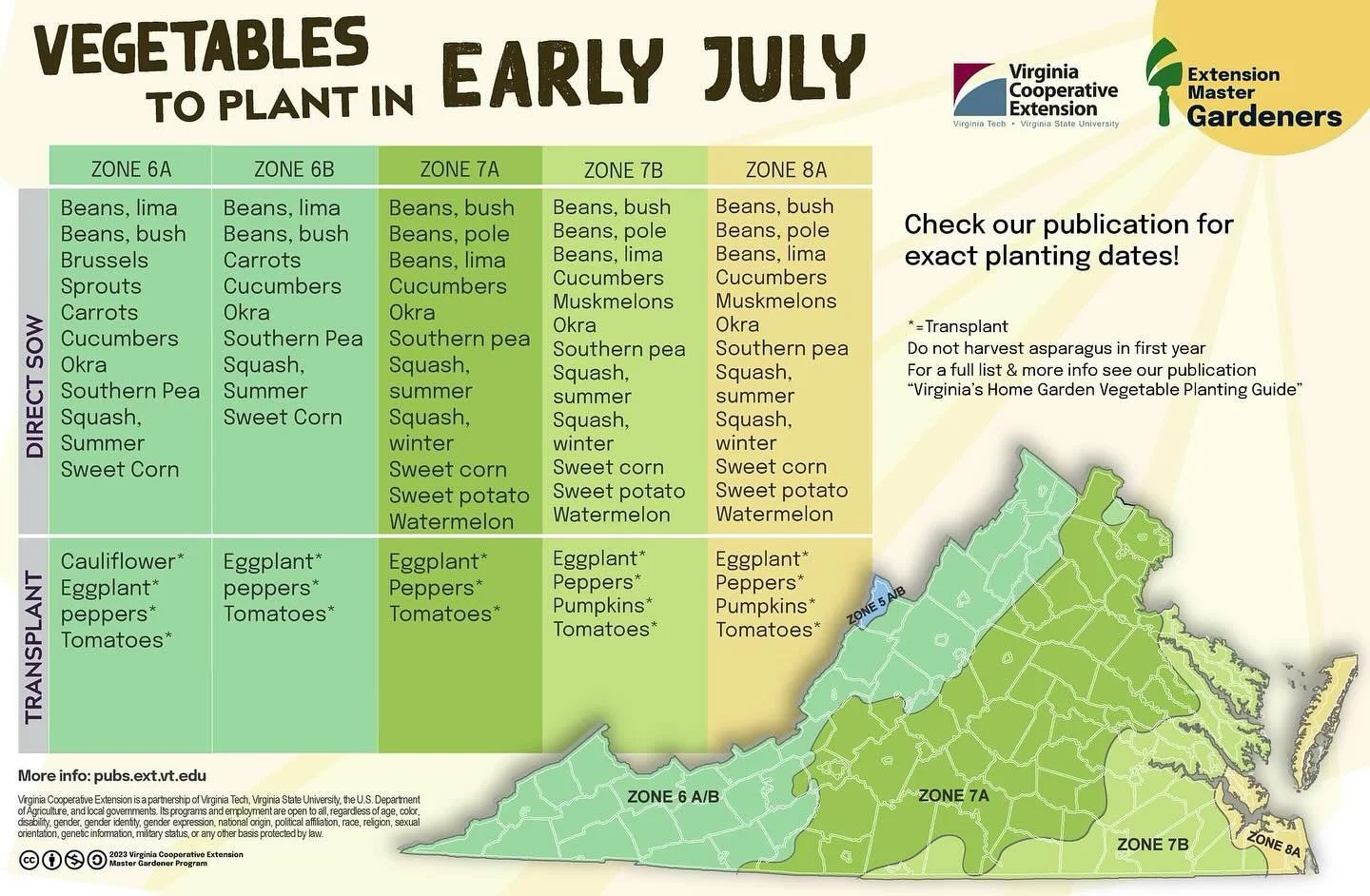
Vegetables to Plant in Early July - credit Virginia Cooperative Extension
The second planting season most gardeners overlook
By the time you hit early July, it’s easy to feel like the planting window has closed.
Your tomatoes are growing, squash is coming on strong, and you’re probably already harvesting a few things. But here’s the part a lot of gardeners miss, early July is actually the start of your second planting season.
What you plant now isn’t about spring, it’s about setting yourself up for a strong late summer and fall harvest.
What You Can Still Plant in Early July
Even with the heat, there are several crops that do well when planted now, especially ones that mature quickly or handle warm soil.
Direct Sow (Seeds in the Ground)
You’ve still got a solid list to work with:
Beans (bush and lima)
Sweet corn
Cucumbers
Summer squash
Okra
Southern peas
You can also plant:
Carrots
These crops germinate quickly in warm soil, often faster than they did earlier in the season.
Thinking Ahead to Fall
This is where early July really matters.
You’re not just planting for August, you’re planting for September and October.
A few crops to start working back into the rotation:
Brussels sprouts (if you’re willing to plan ahead)
Carrots (for a later harvest)
These crops take longer but benefit from maturing in cooler fall temperatures.
Transplants in Early July
If you’re working with plants instead of seed, you can still set out:
Tomatoes
Peppers
Eggplant
This is especially useful if:
Something earlier didn’t make it
You want a second round of production
Just keep in mind, transplants this time of year need a little extra attention to get established in the heat.
What Changes in July
This is where gardening shifts again, just like it did from April to May.
Heat Becomes the Biggest Factor
The challenge now isn’t frost, it’s stress from high temperatures.
Young plants can struggle if they don’t get:
Consistent water
Some protection from intense afternoon sun
Timing Matters More Than Ever
Planting in early July works because it gives crops enough time to mature before fall.
Wait too long, and you start running out of growing days.
Your Spring Crops Are Wrapping Up
By now, most of your:
Lettuce
Spinach
Radishes
are either finished or close to it. That opens up space in the garden for a second round of planting.
A Few Smart Moves for Early July
Use What’s Opening Up
As spring crops finish, don’t leave that space empty. Turn it over and replant it.
Water Consistently
Seeds need steady moisture to germinate in summer heat. Letting the soil dry out even once can slow or stop emergence.
Consider Light Shade for New Plants
Even something simple like planting near taller crops or using shade cloth can help young seedlings get established.
Keep Expectations Realistic
Not everything you plant now will perform like it did in May. Focus on crops that match the season.
The Way to Think About Early July
Early July isn’t the end of planting, it’s a pivot point.
You’re shifting from:
Spring planting
toLate-season production
The gardeners who take advantage of this window are the ones still harvesting fresh vegetables well into the fall.
Want to Go Deeper?
Virginia Cooperative Extension has detailed planting timelines and crop recommendations that are worth referencing as you plan for late-season planting:
https://ext.vt.edu/lawn-garden/home-vegetables.html
Source: Virginia Cooperative Extension, “Virginia’s Home Garden Vegetable Planting Guide”
Most people slow down in July. The ones who keep planting are the ones who get the most out of their garden.
We are Your Locally-Owned Garden Store.