May Vegetable Gardening in Virginia (Zones 6A & 6B)
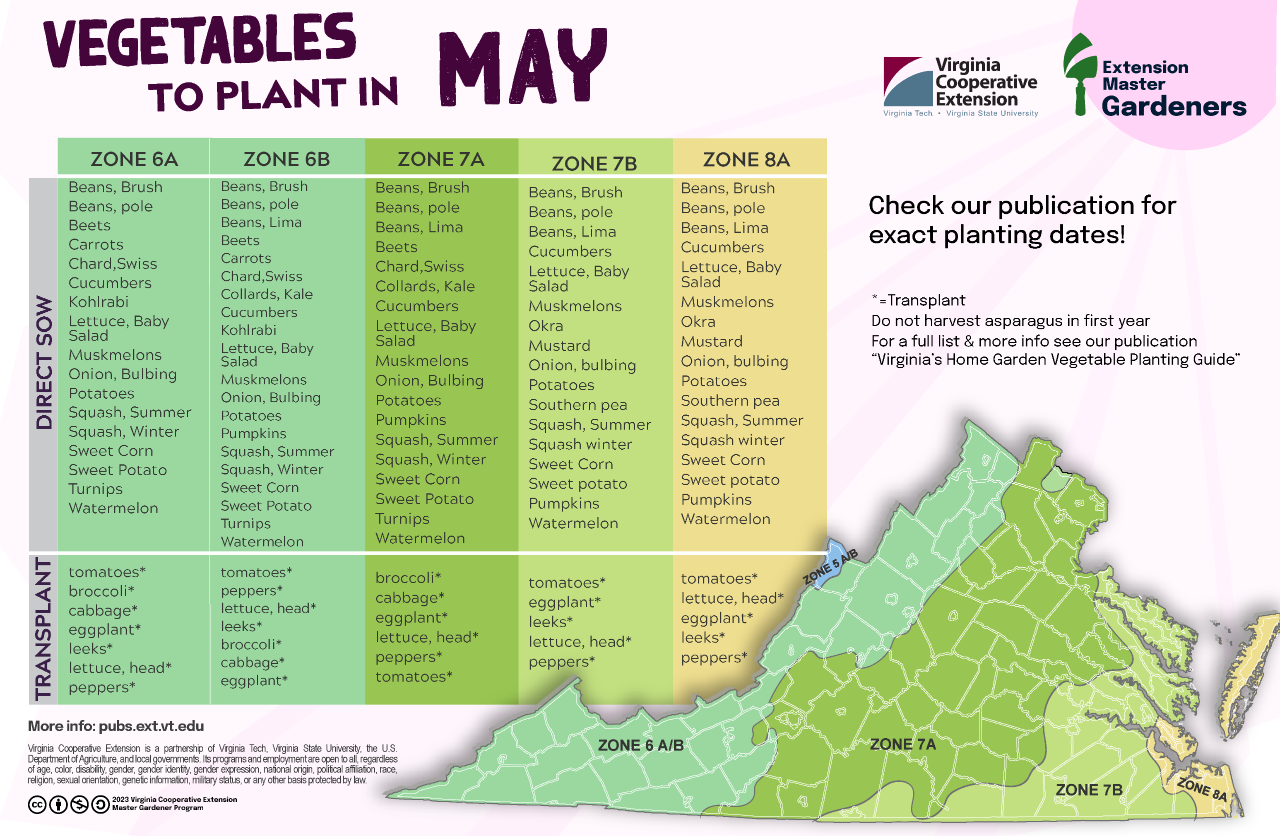
Vegetables to Plant in May - credit Virginia Cooperative Extension
This is when the garden really takes off
If March is about patience and April is about timing, May is when things finally open up.
By the time you hit early May in Zones 6A and 6B, you’re typically past the risk of frost. That changes everything. The restrictions you’ve been working around for the last two months start to disappear, and you can finally plant the crops most people think about when they picture a summer garden.
This is the month where gardens fill in fast.
The Big Shift in May
Up until now, you’ve been working around cold soil and frost risk. In May, the focus shifts to warm-season planting.
Soil temperatures are climbing, nighttime lows are more stable, and crops that struggled earlier now have the conditions they need to grow well.
What You Can Plant in May
Direct Sow (Seeds in the Ground)
This is where your options really expand. You can continue planting some cool-season crops, but May is mainly about getting warm-season crops established:
Beans (bush and pole)
Sweet corn
Cucumbers
Squash (summer and winter)
Pumpkins
Watermelon and muskmelon
Sweet potatoes
Southern peas
Okra
You can also still plant a few holdovers from earlier in the season:
Beets
Carrots
Turnips
Leaf lettuce (especially early in the month)
Transplants (Setting Out Plants)
May is the time most gardeners have been waiting for:
Tomatoes
Peppers
Eggplant
You can also continue planting:
Cabbage
Broccoli
Lettuce
But for most people, this is when the warm-season crops take priority.
A Few Things to Get Right in May
With fewer weather restrictions, success in May comes down to execution.
Give Plants Enough Space
It’s easy to underestimate how big things like tomatoes, squash, and melons get. Crowding plants now leads to problems later, poor airflow, disease pressure, and lower yields.
Stay Ahead of Watering
As temperatures rise, so does demand for water. Consistent moisture is key, especially for:
Tomatoes
Peppers
Cucumbers
Deep, less frequent watering is better than shallow daily watering.
Get Mulch Down Early
Mulch helps regulate soil temperature, retain moisture, and keep weeds under control. Getting it in place early saves time later when things get busy.
Expect Pests to Show Up
As your plants take off, insects will too. It’s easier to manage problems early than after they’ve spread.
One Mistake to Avoid
Even though frost risk is mostly behind you, don’t rush planting into cold soil early in the month.
Warm-season crops like tomatoes and peppers don’t just need no frost, they need warm soil. If the ground hasn’t caught up yet, they’ll sit there and struggle.
Sometimes waiting an extra week or two leads to better growth than planting early.
The Way to Think About May
This is the transition from planning to production.
You’re no longer just getting things started, you’re building the garden that’s going to carry you through the summer.
If March and April were about restraint, May is about taking advantage of the conditions, without getting careless.
Want to Go Deeper?
Virginia Cooperative Extension has detailed planting timelines, spacing recommendations, and crop-specific guidance that are worth referencing throughout the season:
https://ext.vt.edu/lawn-garden/home-vegetables.html
Source: Virginia Cooperative Extension, “Virginia’s Home Garden Vegetable Planting Guide”
May is where the garden starts to look like what you had in mind back in winter. A little attention to timing and spacing now will pay off in a big way once harvest season rolls in.
We are Your Locally-Owned Garden Store.