Why More Livestock Owners Are Switching to Hemp Bedding
Bedding is one of those decisions that feels simple until you start adding up the time, labor, and animal health issues tied to it. Dusty stalls. Wet spots that never dry. Odor that shows up faster than it should. Over time, those problems cost more than just money.
That’s why hemp bedding is gaining traction across equine, livestock, and small-animal operations. It’s not a trend product. It’s a practical upgrade that solves several common bedding headaches at once.
What Is Hemp Bedding?
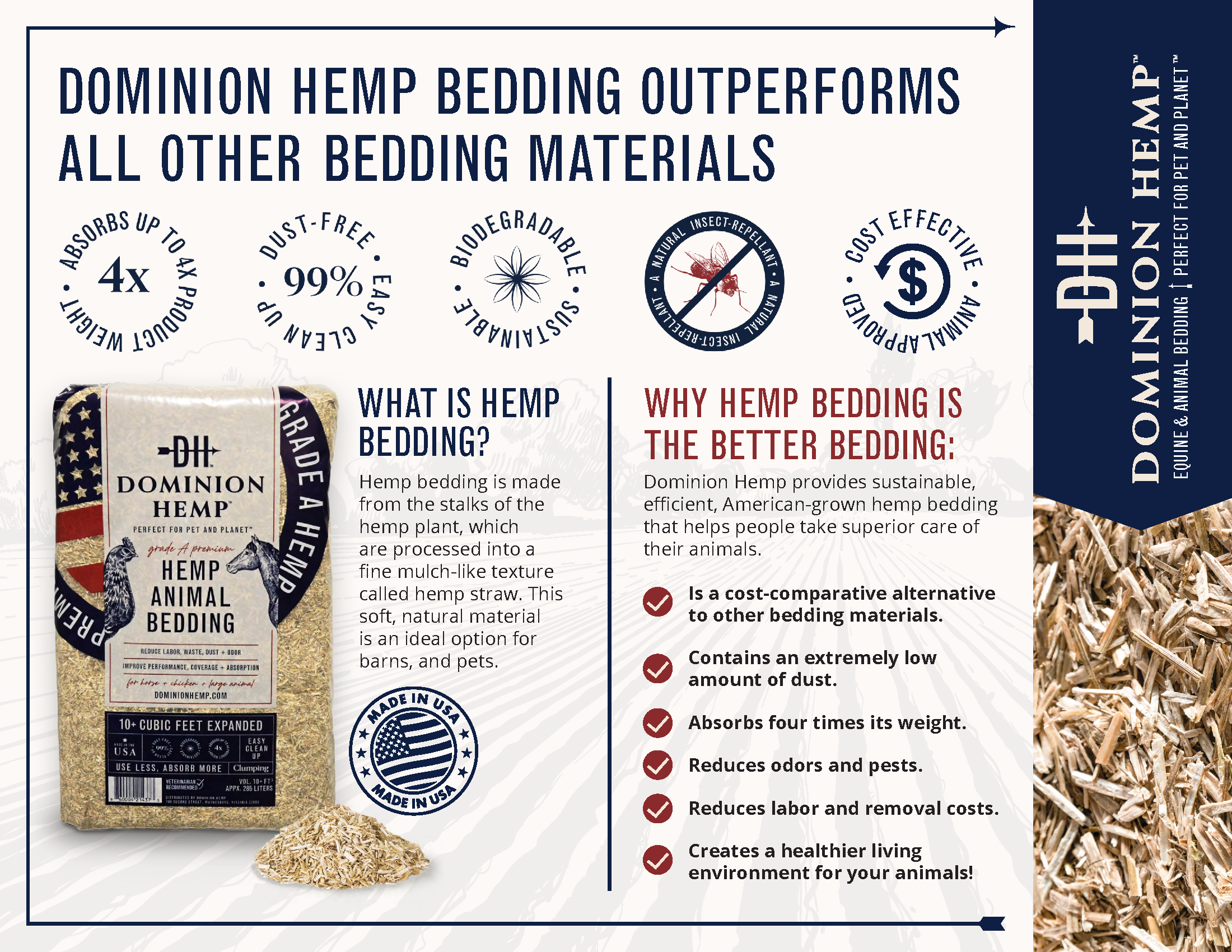
Hemp bedding is made from the stalk of the hemp plant, processed into a soft, straw-like material. It looks similar to chopped straw, but performs very differently. Dominion Hemp bedding is grown and processed in the United States and designed specifically for animal housing environments, from single stalls to full barns.
Where Hemp Bedding Really Shines
1. Horse Stalls and Equine Facilities
For horse owners, dust and moisture are constant concerns. Hemp bedding contains extremely low dust levels, making it a strong option for horses with respiratory sensitivities, heaves, or allergies. Veterinarians often recommend hemp bedding for these cases because it doesn’t break down into fine particles the way many wood products do.
Hemp also absorbs up to four times its weight and clumps when wet, similar to cat litter. That means urine stays contained instead of spreading through the stall, keeping horses drier and helping reduce issues like thrush.
Best fit for:
Performance horses
Horses with respiratory challenges
Barns focused on cleaner, drier stalls with less daily maintenance
2. Livestock Housing and Small Ruminants
In pens for goats, sheep, calves, and other livestock, odor control and moisture management matter. Hemp bedding naturally traps ammonia and odor, improving air quality for both animals and people working in the barn. It also has natural pest-repelling properties that help discourage flies, mites, and other insects.
Because hemp absorbs so efficiently, bedding changes are needed less often, which reduces labor and total bedding usage over time.
Best fit for:
Goat and sheep barns
Calf pens
Multi-species housing
3. Poultry, Small Animals, and Pet Areas
Hemp bedding works well in chicken coops, small animal enclosures, and pet housing thanks to its low dust and strong odor control. It stays fluffy longer, doesn’t mat down quickly, and creates a cleaner environment overall.
Best fit for:
Poultry houses
Small animal pens
Pet bedding where dust control matters
4. Operations Focused on Composting and Sustainability
One of hemp bedding’s biggest advantages shows up after it leaves the barn. Hemp bedding biodegrades in about 6–8 months, compared to 2–4 years for many wood-based products. Used hemp bedding composts easily and can be spread on fields without “burning” grass, since it’s less acidic than traditional shavings or sawdust.
That makes it a smart choice for farms already managing manure and bedding as part of a nutrient cycle.
Best fit for:
Farms composting bedding and manure
Producers looking to reduce waste volume
Sustainability-focused operations
Cost: What Most People Miss
At first glance, hemp bedding is cost-comparative with traditional options. Where it wins is long-term use. Higher absorbency means fewer bags per stall, fewer clean-outs, and less labor. Many customers find they use less bedding overall while getting better stall conditions.
Is Hemp Bedding Right for You?
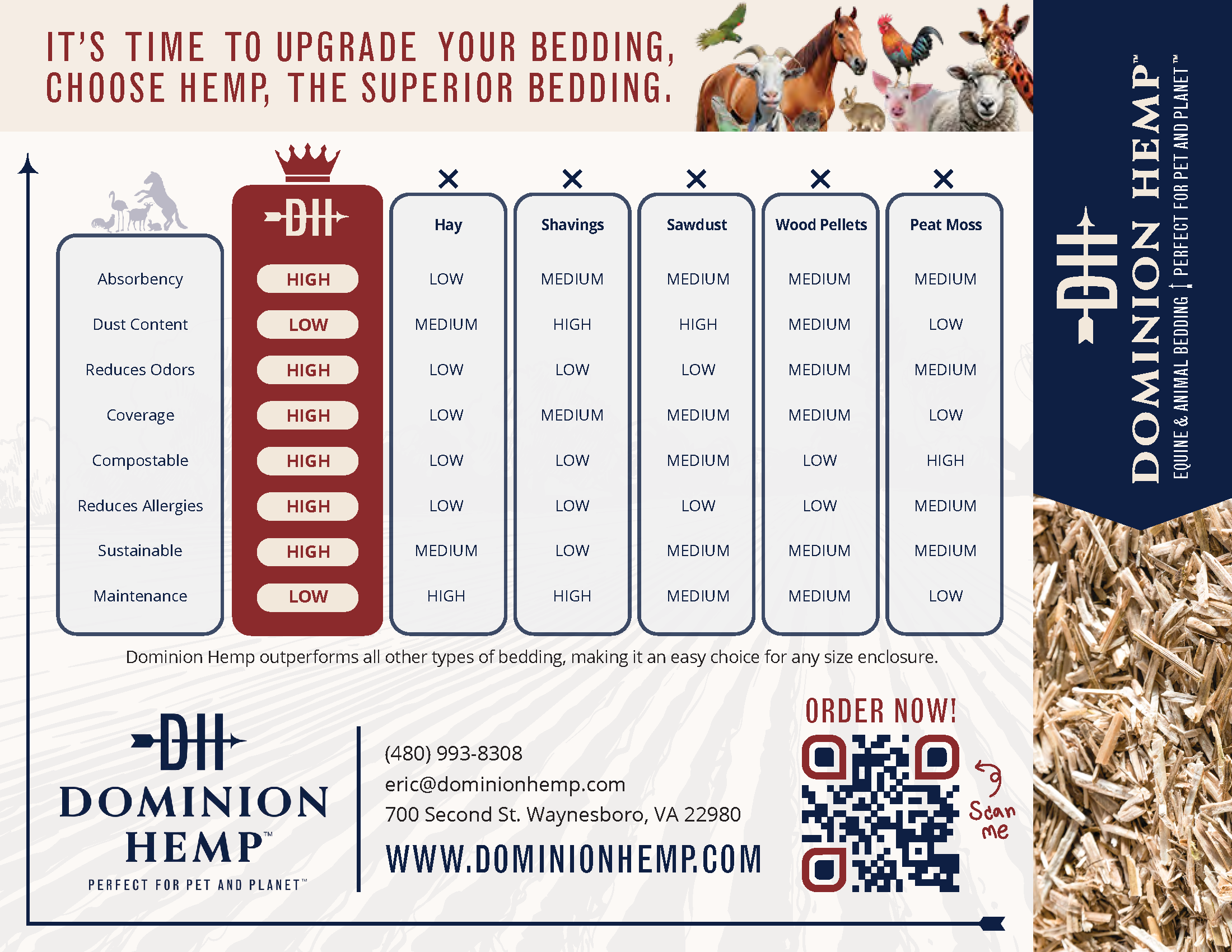
Hemp bedding isn’t about changing for the sake of change. It’s about solving real problems: dust, odor, moisture, labor, and disposal. For many operations, especially those managing horses or livestock indoors, it checks more boxes than traditional bedding materials.
If you’re tired of bedding that creates more work than it saves, hemp is worth a serious look.
Stop by your local Rockingham Cooperative location to learn more about hemp bedding availability and whether it’s a good fit for your operation.
We’re Your Locally-Owned Farm Store.