March Vegetable Gardening in Virginia (Zones 6A & 6B)
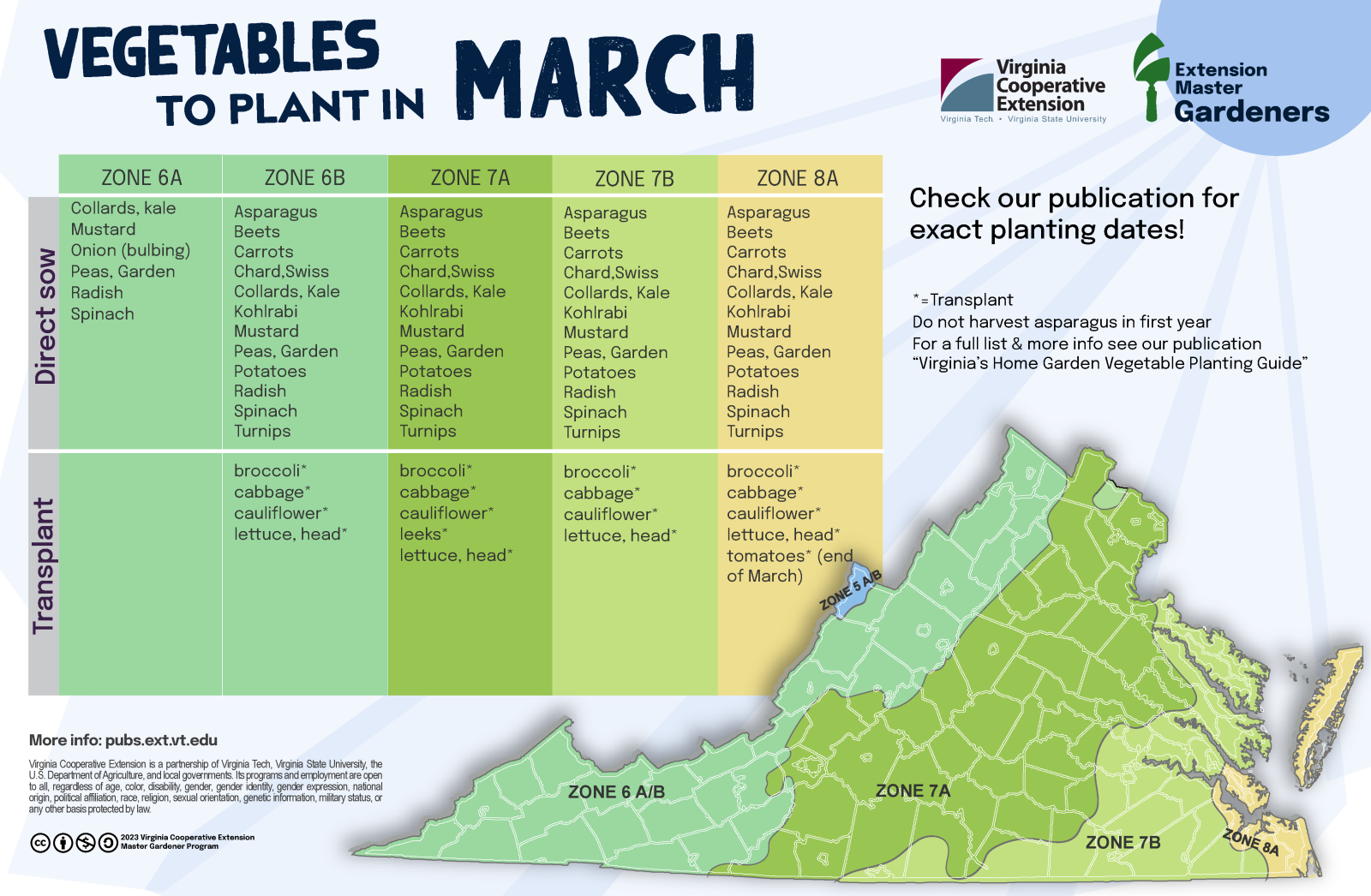
Vegetables to Plant in March - credit Virginia Cooperative Extension
What you can plant now, and what can wait
If you’ve lived in Virginia long enough, you know March can’t make up its mind. One day it feels like spring, the next you’re scraping frost off the windshield again.
That makes this time of year tricky for gardening, but it’s also one of the most important windows to get started, especially here in Zones 6A and 6B.
The key is knowing what can handle the cold and what needs a little more patience.
A Quick Reality Check on Timing
Around here, we usually don’t get past the risk of frost until about the first of May. That’s the number to keep in the back of your mind before you get too ambitious.
March isn’t the month to plant everything. It’s the month to start the right things.
What You Can Go Ahead and Plant
There are quite a few crops that actually prefer this cooler weather. In fact, they do better now than they would if you waited.
Seeds You Can Put Straight in the Ground
Peas
Spinach
Radishes
Carrots
Beets
Turnips
Kale and collards
Mustard greens
Swiss chard
Potatoes
These are your early-season workhorses. They handle cold soil just fine and won’t mind a light frost.
Plants You Can Set Out
If you’re working with transplants, this is a good time to get a few things in the ground:
Broccoli
Cabbage
Cauliflower
Lettuce
Onions and leeks
These crops are built for cooler weather, so getting them established now gives them a strong head start.
What Needs to Wait
This is where most people get burned every year.
It hits 70 degrees for a couple days and suddenly everyone wants to plant tomatoes.
Don’t do it.
Hold off on:
Tomatoes
Peppers
Corn
Beans
These crops need warm soil and steady temperatures. Around here, that usually means after the first of May if you want to be safe.
A Few Things That Make a Big Difference
You don’t need to overcomplicate it, but there are a few small things that go a long way this time of year.
Pay Attention to the Soil
It might feel nice outside, but your soil is still waking up. Cold, wet soil slows everything down.
If you can, work in some compost and give it a few sunny days before planting.
Keep an Eye on the Forecast
March weather can turn on you fast. A simple row cover or even some straw can save young plants if a cold night sneaks in.
Don’t Plant Everything at Once
Crops like radishes, lettuce, and spinach grow quickly. If you plant a little now and a little more in a couple weeks, you’ll stretch your harvest instead of having everything ready at the same time.
The Big Picture
March gardening isn’t about filling the whole garden. It’s about getting a few things started the right way.
If you focus on cold-hardy crops now and hold off on the rest, you’ll be in a much better position when things really take off later in the spring.
Want to Go Deeper?
Virginia Cooperative Extension has put together one of the best resources out there for home gardeners, including planting timelines and crop-specific guidance:
https://ext.vt.edu/lawn-garden/home-vegetables.html
Source: Virginia Cooperative Extension, “Virginia’s Home Garden Vegetable Planting Guide”
It may not look like much now, but this is where a good garden starts. A little work in March makes a big difference come May and June.
We are Your Locally-Owned Garden Store.